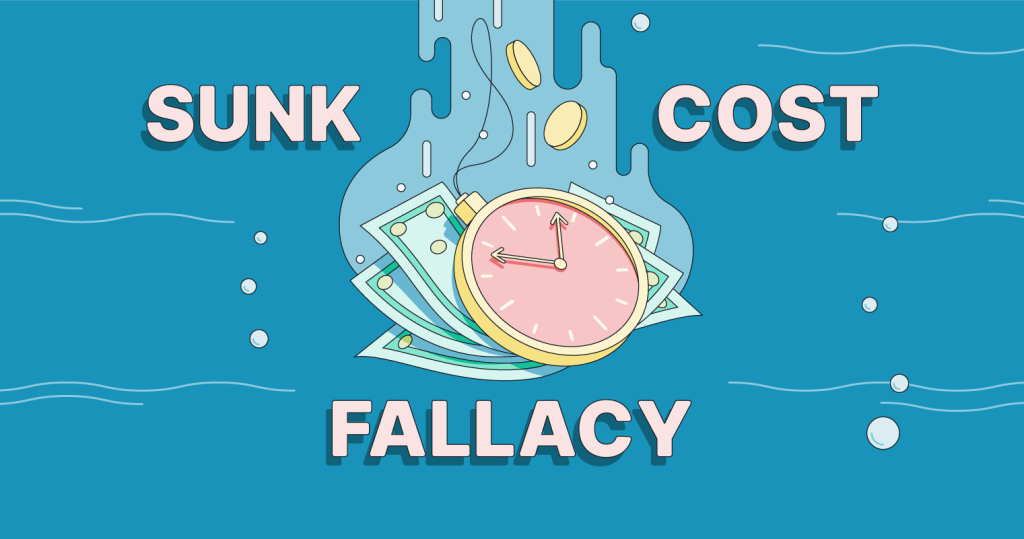
“What a waste of money! Why did I even come to watch this movie? Well, I might as well finish it since I paid for it.”
This right here is a classic example of the sunk cost fallacy. Now you may be scratching your head and might be wondering what this is. Well, don’t worry, because you’re at the right place. Today, we will be talking all about the sunk cost fallacy and its implications in our daily lives.
Let’s start off simple. What is the Sunk Cost Fallacy? It is basically when people continue with a decision they made, just because they have spent or invested in it. So remember the example from a couple lines above, that exactly represents this. What you spent was your money on the movie ticket, and since you don’t want to waste it, you just sit in the theatre to finish the movie. The cost here is the money you spent. This is a sunk cost, meaning it cannot be recovered. So just because you made a decision earlier, you now force yourself to finish that meal even when you’re full, wear those uncomfortable shoes because they were expensive, or finish the movie you now regret coming to watch in the first place.
The sunk-cost fallacy also affects our personal finances. Let’s look at it from an investor’s point of view. So an investor might hold on to losing investments simply because it feels painful to accept a loss. Now that’s not to say that all investors holding investments at a loss are victims of the sunk cost fallacy, but some of them may very well be.
Here’s an example. Let’s say Max is an investor. He decides to buy a stock at $90. As time passes, he watches it fall to $80, then $50, and even $20. So Max may have held on to that stock hoping that it would eventually start rising and may reach prices above $90, even when all the evidence would suggest otherwise. So instead of trusting the data which predicted the loss when the stock was at $80, and enduring a loss of $10, he currently sits on a loss of $70. So now he is at a much worse position than he was at earlier.
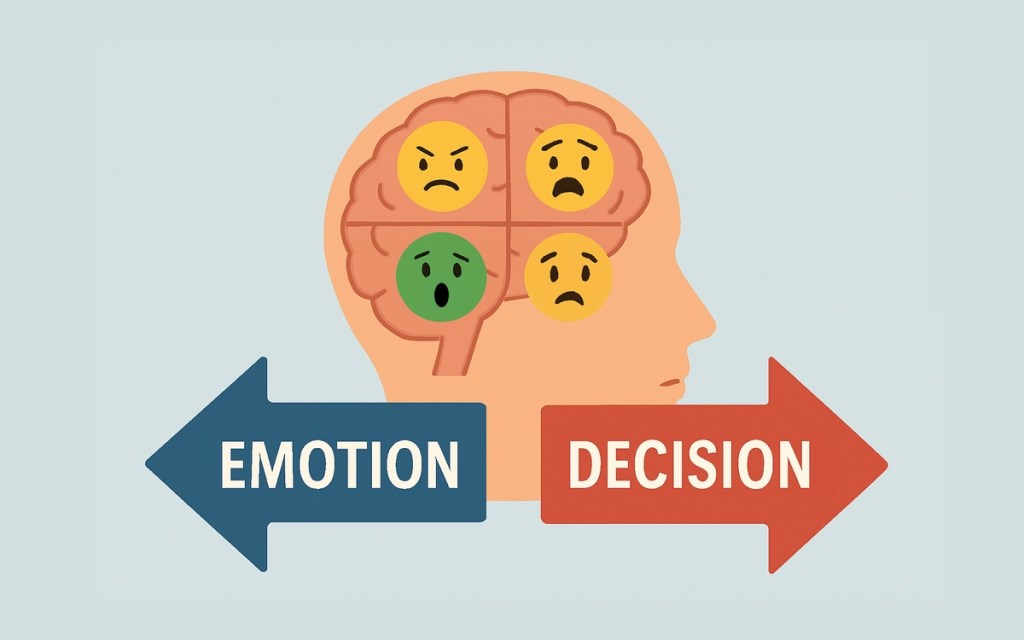
Now there are a couple reasons behind the fallacy. Firstly, people may want to avoid losses. We humans naturally enjoy winning more than losing. So this belief can cloud our judgement and may push us to make poor decisions. Another reason is wanting to justify past decisions. People may want to feel competent, and admitting to their mistakes can hurt their self-esteem. So they choose to continue with a decision in an attempt to convince themselves that the original decision wasn’t wrong, even if it was. There is also the fear of wasting effort. Many people worry about walking away from decisions making all their previous efforts fruitless. The idea of all their hard work going to waste makes them continue, even when stopping would be a better decision.
Now here is how you can overcome the sunk-cost-fallacy. To begin with, you must focus on the future costs and benefits. Instead of thinking, “What have I already spent?”, think about, “What will help me the most from this point onwards?”. Another key question you can ask yourself is, “If I hadn’t already invested in this, would I still choose this option today?”. These types of questions help you reflect on the past in a meaningful way whilst also allowing you to make the best possible decisions for the future. It is definitely a better decision to analyse future outcomes than to stay stuck on the past.
To conclude, I believe it is very important for us to understand that sunk costs are gone, and that no matter what we do, they cannot be recovered. Avoiding the sunk-cost fallacy can improve financial decisions, career choices and even personal well-being. So the earlier you step away from the fallacy, the better your outcomes may be.
 Finovate
Leave a comment