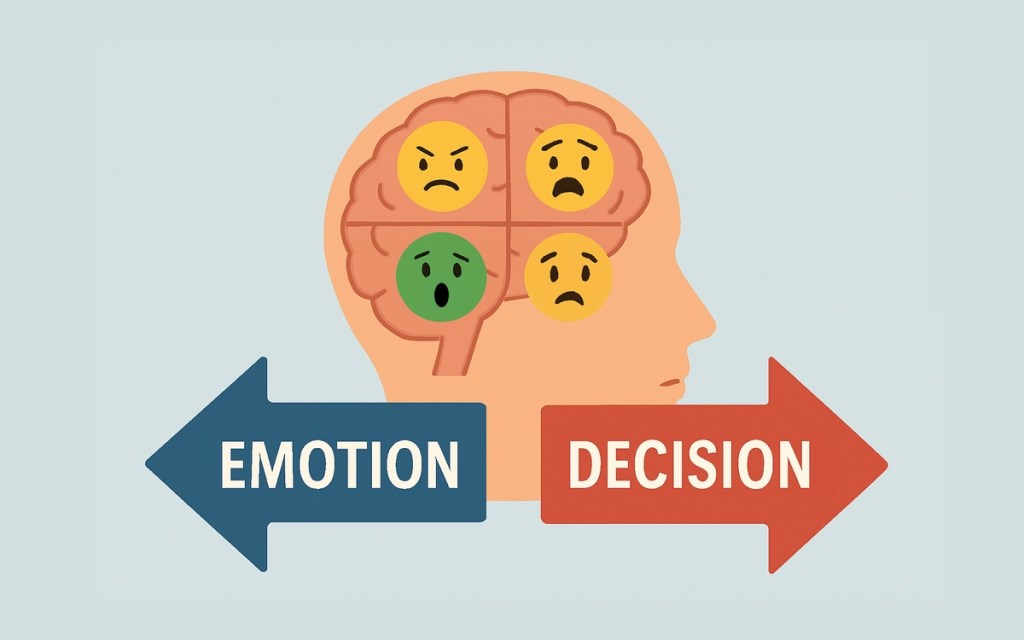
We like to believe that our financial decisions are rational. But in reality, it is often true that our emotions pave the way. From impulse purchases to the panic selling of investments, our feelings mould our financial decisions. Often, we ourselves place the veil of logical decisions on emotional influences. And today, we are going to reach the depths of this topic.
Sadness – The Silent Shopper
When disheartened or emotionally drained, we seek relief and joy. This is where the ‘feel good hormone’ makes its entry. Dopamine is secreted when we are experiencing a reward, in this scenario, the pleasure of purchasing. This is commonly known as retail therapy, where people buy to improve their emotional state. However, this surge of happiness is short-lived. Even if you feel better temporarily, sadness driven spending leads to unnecessary purchases, overspending and post-purchase regret.
Here’s another way to look at it. Let’s say you’ve spent the past couple of months building a giant, 4-foot-tall Lego Eiffel tower. And in the middle of this process, you grab a hammer and smash it into the middle of the build. Now the Lego Eiffel tower is your hard-earned savings, and the hammer is your unnecessary spending. All you did was set yourself back. So while the dopamine boost from shopping provides short term jubilation, it more often than not leads to future problems arising.
Anger – Risky Financial Rebellion
The red emotion leads to an impulsive and rebellious behaviour. When in anger, we aren’t in the right state of mind. We say things we don’t mean, we do things we otherwise wouldn’t have, and yes, we make financial decisions that we should not. Ignoring carefully crafted budgets out of frustration, abruptly quitting a job without any planning, and making reckless investments without any data just to prove a point are all effects of anger. And there is a very simple explanation. Anger clouds our rational thinking; escalating small mistakes into serious financial problems. In succinct, it acts as a destructive force, keeping us away from the elements we require to obtain financial stability.
Fear – The Enemy of Investing
Fear is an emotion that makes us go against the data. Even if you know that a long-term gain will be preceded by a short-term fall, the nightmare of losing money holds us back. There are 2 major ways in which fear plays a role. Firstly, we avoid investing. We choose to avoid one of the best methods to grow our wealth. Why? Because we become too scared. We simply avoid investing due to the fears of losing money. And secondly, we panic and sell investments without a second thought. Even after pouring in days of hard work into researching the best time to sell a stock, sometimes, all the research goes out the window when some numbers fall just a bit. The consequences are: missed opportunities to grow wealth, remaining in the same financial position, and a lack of progress.
For example, in the beginning of April 2025, the SnP 500 stock took a bit of a dive. Now if you had invested time in researching this stock, there’s a chance where you would have known to invest in the right time. So right after the stock plummeted, you may have had the idea to invest. But fear may have made you stop and think about the other side. What if the stock falls even more?
Excitement – The Impulse Trigger
This is when we feel almost out of control and make rash decisions. Excitement takes over during sudden market booms, winning a lottery or a bonus and reaching a big milestone. This joy that we experience can drive us into mistakes. For example, when we see sales happening, we may fall victim to impulse buying. And when we are very excited, overconfidence can lead to us investing without any research. So now those actions we took under thrill, can derail us from our long-term financial plans and can lead to us being remorseful about buying items we simply didn’t need.
Final Remarks
Having stated the above, I think it is fair to say that emotions aren’t the best financial decision makers. Therefore, it is vital to hold ourselves back when under the influence of strong emotions. Even though it is practically impossible to not have any emotions, the calmer and more controlled you are while making decisions, the better the outcome will be.
 Finovate
Leave a comment